Alfa Romeo Giulia coupés, Lancia Fulvias, Fiat 500s, Maserati V8 grand tourers: Italy built a huge range of cars between the 1950s and the 1990s. Many of them are now some of the most loved classics in the world. This guide covers more than 60 of those models, brand by brand. For each one it gives the production years, the main engines, the designer where it matters, and a short “What to check” line based on well-documented weak points.
We are Gruppo Classics, a classic car specialist in Piedmont, Italy. We source and sell classics from Italy to buyers worldwide, with the USA as our biggest growth market. Every model here is one that buyers ask us about.
Why buy an Italian classic from Italy
Most of these cars were sold new in Italy, often in much bigger numbers than anywhere else. That means more choice, more cars with their original Italian registration documents, and more cars that have stayed with one or two owners for decades.
Climate matters as well. Cars that spent their lives in central and southern Italy have often seen far less road salt and wet winters than cars from northern Europe or the American snow belt. That does not make every Italian car rust free, but it improves the odds.
Italy also has a strong certification system. The ASI (Automotoclub Storico Italiano) issues certificates that record a car’s identity and originality, and the Targa Oro involves an inspection by model experts. Read more in our guide ASI certification explained.
Jump to a brand:
- Alfa Romeo
- Fiat
- Lancia
- Abarth
- Autobianchi
- Innocenti
- Maserati
- Ferrari
- Lamborghini
- De Tomaso
- Iso
- Bizzarrini
- Buying an Italian classic from abroad
Alfa Romeo
Alfa Romeo built its post-war reputation on light cars with strong twin-cam engines. Its all-alloy four-cylinder Twin Cam powered almost everything from the Giulietta of 1954 to the Spider of 1993, and the later V6 is one of the great engines of the 1980s.
Alfa Romeo Giulietta (1954-1965)
The Giulietta family made Alfa Romeo a volume maker. It came as a Berlina saloon, a Sprint coupé styled by Franco Scaglione at Bertone, a Spider designed by Pinin Farina, and the rarer Sprint Speciale and aluminium-bodied SZ by Zagato. All used the 1290 cc Twin Cam four, in outputs from about 50 PS to about 100 PS. Around 177,690 were built.
What to check: rust in sills, floors and the bottoms of doors and wings; completeness of model-specific trim.
Alfa Romeo Giulia saloon (1962-1978)
The boxy Giulia looks plain, but wind-tunnel work gave it a drag coefficient of 0.34, very low for a 1960s saloon. Engines were 1.3 and 1.6 litre twin-cams, and the Giulia Super of 1965 became the best seller. The TI Super of 1963-64 was a lightweight homologation car with only 501 built, and the Nuova Super of 1974 brought a flat boot lid and new grille.
What to check: rust in sills, floors, jacking points and wheel arches; second gear synchromesh, a known weak point on 105-series gearboxes.
Alfa Romeo Giulia Sprint GT, GT Junior and GTV (105/115 coupé, 1963-1977)
The Bertone coupé, designed by a young Giorgetto Giugiaro, is for many people the definitive Alfa. The range started with the Giulia Sprint GT 1600 in 1963 and grew into the GT 1300 Junior, GT 1600 Junior, 1750 GTV and 2000 GTV. Early cars have the “scalino” or step-front bonnet, which the 1750 GTV dropped. All used the Twin Cam four, from 1290 cc to 1962 cc.
What to check: rust in sills, floors, jacking points, wheel arches and around the windscreen and rear window; second gear synchro wear; correct engine and gearbox for the version, since many Juniors were upgraded to larger engines.
Alfa Romeo Giulia GTA and GTA 1300 Junior (1965-1975)
The GTA (Gran Turismo Alleggerita) was the lightened racing version of the Sprint GT, with aluminium outer panels and a twin-plug 1570 cc engine. The GTA 1300 Junior followed from 1968 to 1975, and the Autodelta-developed GTAm used an enlarged 1750 engine. These are serious competition cars with a large racing history.
What to check: documented history and authenticity above everything else, since many replicas have been built from standard coupés.
Alfa Romeo Spider Duetto (Series 1, 1966-1969)
The first Spider, with its “osso di seppia” (cuttlebone) round tail, was designed by Pininfarina and built at its Grugliasco plant. Engines were the 1570 cc, then the 1779 cc 1750 and the 1290 cc Junior. A 1966 Spider 1600 starred in the film The Graduate. Only 13,678 Series 1 cars were built, which makes it the rarest and most sought-after Spider.
What to check: rust in sills, floors (the driver’s footwell is often first to go), wheel arches, boot floor and spare wheel well; second gear synchro; originality of the round tail and early details.
Alfa Romeo Spider Series 2, 3 and 4 (1970-1993)
In 1970 the Spider gained a cut-off “Kamm” tail (coda tronca), and it stayed in production in that basic form until 1993. Series 2 ran to 1982/83 with 1.3, 1.6, 1.75 and 2.0 litre engines. Series 3 (1983-1990) brought black rubber bumpers and a rear spoiler, and Series 4 (1990-1993) cleaned up the styling again, with fuel injection. In total about 124,104 Spiders of all series were built.
What to check: rust in sills, floors, jacking points, wheel arches and boot floor (on Series 4 the plastic sill covers can hide corrosion); hood frame and seals; injection and electrics on later cars.
Alfa Romeo Montreal (1970-1977)
The Montreal began as a concept at Expo 67 in Montreal and became a production car with a 2593 cc V8 derived from Alfa’s racing engines. Marcello Gandini designed it at Bertone, and 3,917 were built. It is one of the most distinctive Italian grand tourers of the 1970s.
What to check: condition of the V8 and its SPICA mechanical fuel injection, which needs a specialist; rust in sills and floors; completeness of the unique trim parts.
Alfa Romeo Alfasud (1971-1983)
The Alfasud was a radical front-wheel-drive car developed by Austrian engineer Rudolf Hruska and styled by Giugiaro at Italdesign. Flat-four boxer engines of 1.2 to 1.5 litres gave it a low bonnet and excellent handling. It was built at Pomigliano d’Arco near Naples, which gave the car its name.
What to check: rust everywhere, since the Alfasud was notorious for corrosion; look closely at sills, floors, wheel arches, inner wings and door bottoms.
Alfa Romeo Alfasud Sprint and Sprint (1976-1989)
The Sprint was a lower, more angular coupé on the Alfasud platform, again designed by Giugiaro. It used boxer engines from 1.3 litres upward and was renamed simply Alfa Romeo Sprint in 1983. It is a light, sharp-handling coupé that is still overlooked.
What to check: the same rust areas as the Alfasud saloon; cambelt history of the boxer engine.
Alfa Romeo Alfetta GT and GTV (1974-1987)
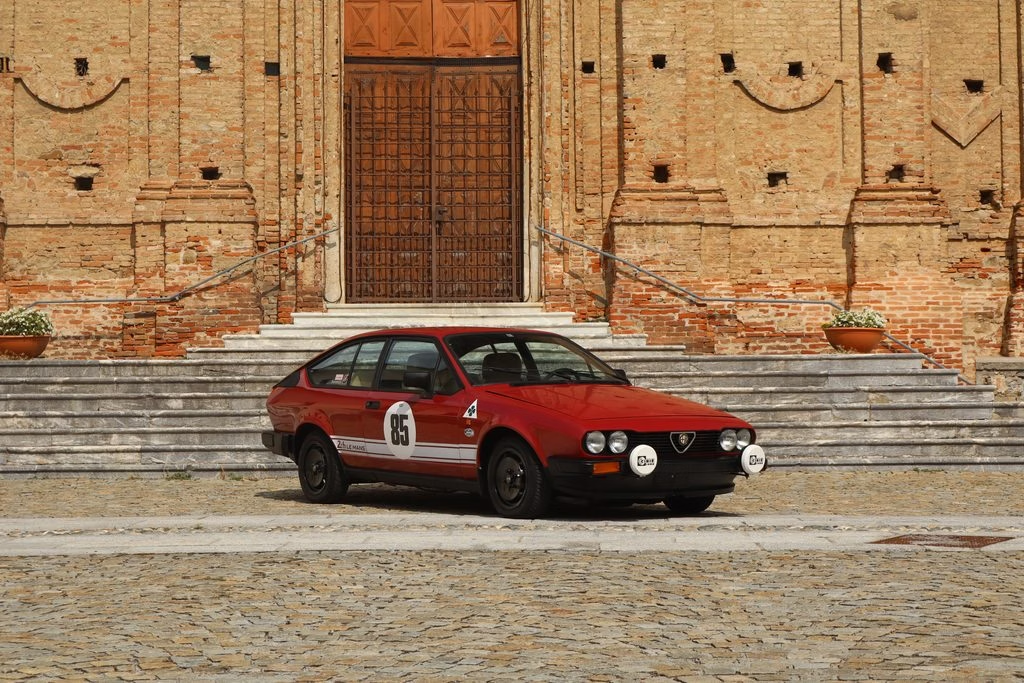
The Alfetta GT put the gearbox and clutch at the rear with the differential (a transaxle), with a De Dion rear axle and inboard rear brakes, for near-ideal weight distribution. Giugiaro did the initial design at Italdesign. Engines were the 1.8, 1.6 and from 1976 the 2.0 litre Twin Cam. We have a full Alfa Romeo Alfetta GTV buyer’s guide, and we currently have a 1985 Alfetta GTV for sale at €14,500, later fitted with a tuned 2.0 Twin Spark engine.
What to check: rubber driveshaft couplings (doughnuts) and the transaxle, including the gear change; inboard rear brakes; rust in sills, floors, door bottoms and rear valance.
Alfa Romeo GTV6 (1980-1987)
The GTV6 put the 2.5 litre V6 from the Alfa 6 saloon into the Alfetta GTV body, with a bonnet bulge to clear it. The V6, designed under Giuseppe Busso, is famous for its sound and smooth power. The GTV6 was also successful in touring car racing.
What to check: the same transaxle, driveshaft coupling and rust points as the four-cylinder GTV; cambelt and tensioner history of the V6.
Alfa Romeo 75 (1985-1992)
The 75 was the last rear-wheel-drive Alfa saloon before the Fiat era, styled by Ermanno Cressoni with a distinctive wedge shape. It kept the transaxle layout and offered 1.6, 1.8 and 2.0 litre fours, a 1.8 Turbo, the 2.0 Twin Spark from 1987 and 2.5 and 3.0 V6 engines. In North America it was sold as the Milano. About 500 Turbo Evoluzione homologation cars were built in 1987.
What to check: driveshaft couplings and transaxle; rust in sills, jacking points and boot floor; on Turbo Evoluzione cars, documented authenticity.
Alfa Romeo 33 (1983-1995)
The 33 replaced the Alfasud and kept its flat-four boxer engines, from 1.2 to 1.7 litres. It was built at Pomigliano d’Arco, with a Pininfarina-designed estate (Giardinetta, later Sport Wagon) and four-wheel-drive versions. The 1.7 Quadrifoglio Verde is the version enthusiasts look for.
What to check: rust in sills, wheel arches and floor; boxer engine cambelt history; condition of the 4×4 system on four-wheel-drive versions.
Alfa Romeo SZ and RZ (1989-1994)
The SZ, nicknamed “Il Mostro”, was a limited-production coupé assembled by Zagato near Arese, with styling from Centro Stile Fiat (initial sketches by Robert Opron, finished by Antonio Castellana). It used the 3.0 litre V6 from the 75, and about 1,036 were built from 1989 to 1991. The RZ roadster followed from 1992 to 1994, in a run of under 300 cars.
What to check: condition of the composite body panels, which are hard to replace; suspension and hydraulic ride height system; full service history.
Alfa Romeo GTV and Spider (916, 1993-2005)
The 916 GTV and Spider were designed by Enrico Fumia at Pininfarina, with a sharp wedge and a low nose. Engines included the 2.0 Twin Spark four, a 2.0 V6 Turbo for the Italian market, and 3.0 and 3.2 litre V6s. They are now emerging as modern classics.
What to check: cambelt and variator history on the Twin Spark; suspension bushes; rust under the rear deck on Spiders.
Fiat
Fiat put Italy on wheels, and many of its small cars are now design icons. It also built some excellent sports cars, often with bodies by Pininfarina or Bertone and twin-cam engines designed by former Ferrari engineer Aurelio Lampredi.
Fiat 500 (Nuova 500, 1957-1975)
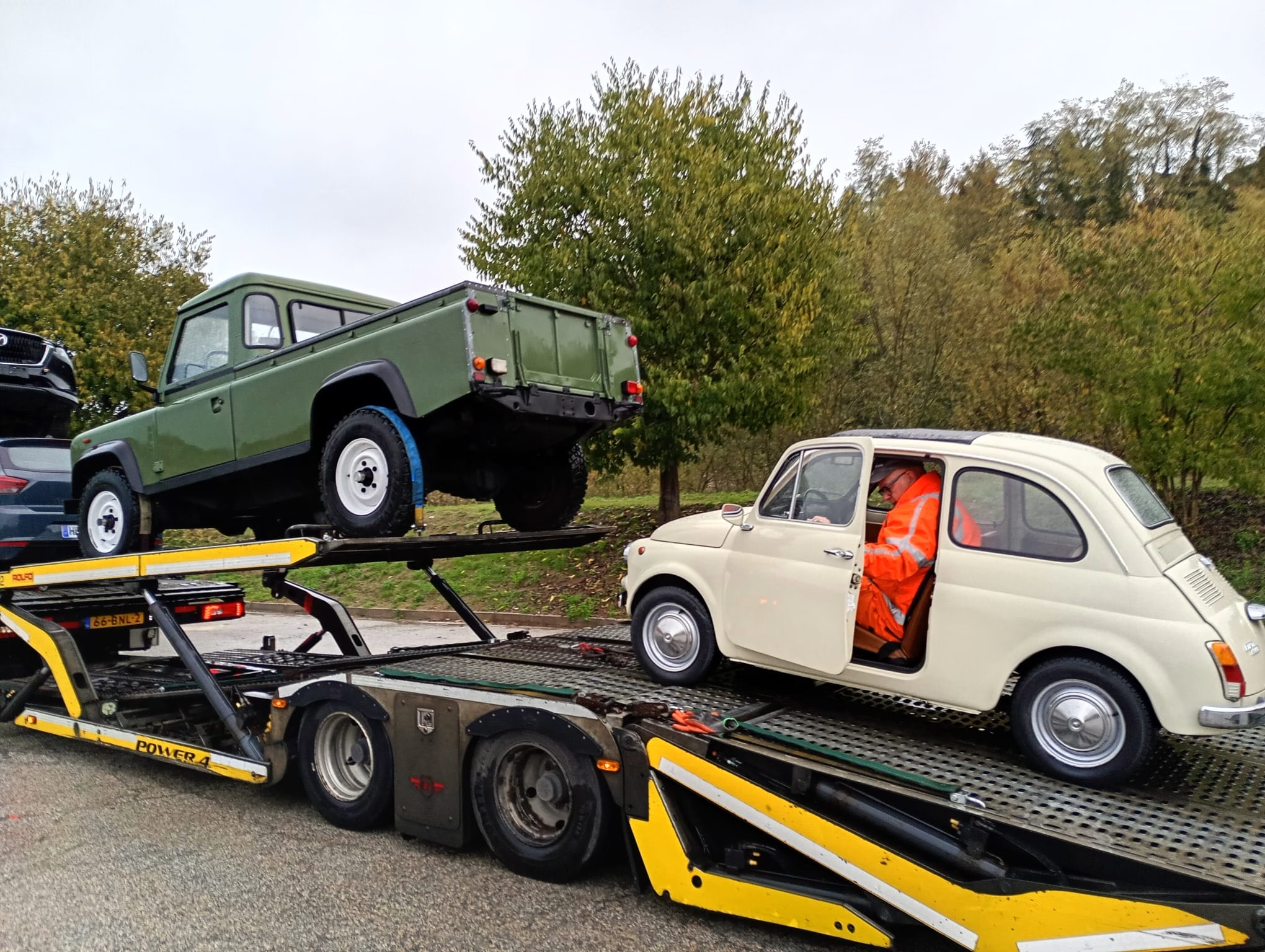
The Fiat 500, designed by Dante Giacosa, is the most recognised Italian classic of all. About 3.9 million were built. The main versions are the original Nuova (1957-1960), the 500 D (1960-1965) with suicide doors, the 500 F (1965-1972) with front-hinged doors, the better-trimmed 500 L (1968-1972) and the 500 R (1972-1975) with the 594 cc engine. All have an air-cooled two-cylinder engine in the rear. Read our guides classic Fiat 500 for sale, what a classic Fiat 500 costs and Fiat 500 F, L or R: which should you buy. Since August 2026 we have sold ten classic Fiat 500s, at prices between €8,500 and €12,500.
What to check: rust in floor pans, sills, door bottoms, the front panel around the headlights, the battery tray and front crossmember; quality of past restoration work.
Fiat 500 Giardiniera (from 1960)
The Giardiniera was the estate version of the 500, with the engine laid flat under the floor to make room for luggage. It has a longer wheelbase and a full-length opening roof. From 1968 it was sold as the Autobianchi Giardiniera.
What to check: the same rust points as the 500 saloon plus the rear floor and tailgate; engine cooling, since the flat engine runs hotter.
Fiat 600 (1955-1969)
The 600 came before the 500 and was Dante Giacosa’s rear-engined four-seater for Italian families. It used a water-cooled four-cylinder of 633 cc, later 767 cc. It was built under licence in Spain (SEAT 600), Yugoslavia (Zastava) and elsewhere, and is the base of the Abarth 750, 850 TC and 1000 TC.
What to check: rust in floors, sills and front panel; whether a car is an Italian Fiat or a licence-built SEAT or Zastava, which matters for originality.
Fiat 600 Multipla (1956-1967)
The Multipla was a forward-control people carrier on 600 mechanicals, seating six in a car shorter than many modern superminis. It is a cult car today, and about 240,000 were built.
What to check: rust in floors, door bottoms and the front panel; completeness of the seating and interior, which is hard to source.
Fiat 850 Coupé and Spider (1965-1973)
The 850 saloon spawned two attractive sporting versions in 1965: a Fiat-styled Coupé and a Spider designed by Giugiaro at Bertone and built at Grugliasco. Engines were 843 cc, then 903 cc in the 1968 Sport models. Many Spiders went to the USA with an 817 cc engine for emissions rules.
What to check: rust in sills, floors and the Spider’s rear wings; cooling system condition on the rear-engined cars.
Fiat 124 Sport Spider (1966-1985)
The 124 Spider is one of the most successful Italian sports cars ever, styled at Pininfarina by Tom Tjaarda. It used the Lampredi twin-cam four, growing from 1438 cc to 1995 cc. About three quarters of the nearly 200,000 built went to the USA. From 1982 Pininfarina built it under its own name as the Spidereuropa (Spider Azzurra in North America).
What to check: rust in sills, floors, rear wheel arches and the unibody rails; cambelt history of the twin-cam, which has a belt-driven camshaft drive; sun damage to trim on cars from dry climates.
Fiat 124 Sport Coupé (1967-1975)
The 124 Coupé shared its twin-cam engine with the Spider and was styled at Centro Stile Fiat by Mario Boano. It came in three series: AC (1967-1969), BC (1969-1972) and CC (1972-1975), with engines from 1438 cc to 1756 cc. It is a practical four-seater with sports car mechanicals.
What to check: rust in sills, floors and wheel arches; twin-cam cambelt history; series-specific trim parts.
Fiat Dino Spider and Coupé (1966-1973)
The Fiat Dino exists because Ferrari needed 500 road engines to homologate its V6 for Formula 2. The Spider was built by Pininfarina and the 2+2 Coupé by Bertone. The 2.0 litre aluminium V6 was used until 1969, then a 2.4 litre iron-block V6 with independent rear suspension. Only 420 Dino 2400 Spiders were built.
What to check: engine condition and documented history, since parts for the Ferrari-designed V6 are expensive; rust in sills and floors.
Fiat 128 Coupé and 3P (1971-1980)
The 128 was European Car of the Year in 1970 and set the template for front-wheel-drive cars with a transverse engine. The 128 Coupé (1971-1975) and the hatchback 3P Berlinetta (1975-1980) used the Lampredi-designed single-cam 1116 and 1290 cc engines. Few survive in good condition.
What to check: rust everywhere, especially sills, floors and wheel arches; cambelt history.
Fiat 130 Coupé (1971-1977)
The 130 was Fiat’s flagship, and the Coupé, styled by Paolo Martin at Pininfarina, is one of the cleanest designs of the 1970s. It used a 3.2 litre V6 designed by Aurelio Lampredi. About 4,300 to 4,500 Coupés were built.
What to check: rust in sills, floors and boot; condition of the V6; interior and trim parts, which are scarce.
Fiat X1/9 (1972-1989)
The X1/9 is a mid-engined two-seater with a removable roof, designed by Marcello Gandini at Bertone. It used 128-derived engines of 1290 cc, then 1498 cc with a five-speed gearbox from 1978/79. Fiat built it until 1982, then Bertone until 1989. About two thirds of the roughly 160,000 built went to the USA.
What to check: rust in sills, door pillars, scuttle, suspension turrets and the engine cover; cambelt every few years; fuel lines, which perish with age.
Fiat 131 Abarth Rally (from 1976)
The 131 Abarth was the road version of Fiat’s rally car, with 400 built in 1976 for homologation. It used a 1995 cc twin-cam with about 140 PS, and independent rear suspension. The rally car won the World Rally Championship for manufacturers in 1977, 1978 and 1980.
What to check: authenticity and history, since many tribute cars exist; rust in sills and floors.
Fiat Ritmo Abarth 125 TC and 130 TC (1981-1987)
The Ritmo was styled at Centro Stile Fiat by Sergio Sartorelli. The Abarth 125 TC of 1981 and 130 TC of 1983 used a 1995 cc twin-cam with 125 and 130 PS, the 130 TC on twin carburettors. They are among the fastest hot hatches of their time.
What to check: rust in sills and wheel arches; twin-cam cambelt; originality of the Abarth parts.
Fiat Uno Turbo i.e. (1985-1994)
The Uno was designed by Giugiaro at Italdesign. The Turbo i.e. of 1985 used a 1301 cc turbo engine with 105 PS, and the restyled version from 1990 a 1372 cc engine with 118 PS. Many were modified, so original examples are now rare.
What to check: originality and evidence of modifications; turbo and engine condition; rust in sills and wheel arches.
Fiat Panda 4×4 (1983-2003)
The first Panda was designed by Giugiaro and Aldo Mantovani at Italdesign. The 4×4, launched in 1983, used a drivetrain supplied by Steyr-Puch and engines of 965 cc, then 999 cc and 1108 cc FIRE. It is a favourite of mountain villages across Italy and a growing cult classic.
What to check: rust in floors, sills and rear wheel arches; condition of the 4×4 drivetrain and the rear axle.
Fiat Cinquecento Sporting (1994-1998)
The Cinquecento was built in Tychy, Poland, and the Sporting version from 1994 used the 1.1 litre FIRE engine. It is a light, simple car with a small but loyal following.
What to check: rust and originality; many were modified.
Fiat Barchetta (1995-2005)
The Barchetta is a front-wheel-drive roadster designed by Andreas Zapatinas and Alessandro Cavazza under Peter Barrett Davis at Centro Stile Fiat. It used a 1747 cc twin-cam with variable valve timing and was built only in left-hand drive. Final assembly was by Maggiora, later moved to Mirafiori. Read our short essay on the Barchetta.
What to check: cambelt, tensioner and variator history; hood condition; rust on the sills and rear wheel arches.
Fiat Coupé (1993-2000)
The Fiat Coupé was designed by Chris Bangle at Centro Stile Fiat, with an interior by Pininfarina, which also built the car. Engines were 1.8 and 2.0 litre fours and 2.0 litre five-cylinders, the most powerful being the 220 PS 20V Turbo. The 1998 Limited Edition had a six-speed gearbox and a numbered badge.
What to check: cambelt history, which is critical on the five-cylinder; turbo condition; signs of hard use or modification.
Lancia
Lancia was the engineer’s brand of Italy, with narrow-angle V4 engines, flat-fours and the first V6s, and later the most successful rally team in history. Lancias can be fragile on rust, but the best ones are rewarding cars to own.
Lancia Aurelia B20 GT and B24 Spider (1950-1958)
The Aurelia used one of the first series-production V6 engines, growing from 1.8 to 2.5 litres, with a rear transaxle. The B20 GT coupé of 1951 is often called the first true gran turismo. The open B24 Spider America was built only in 1954-55, with 240 examples, followed by the B24 convertible.
What to check: documented history and matching numbers; rust in floors and sills; completeness of the transaxle and its rare parts.
Lancia Appia (1953-1963)
The Appia was a compact saloon with a 1089 cc narrow-angle V4 and the last Lancia with sliding-pillar front suspension. It is also the base of several coachbuilt versions: a Pinin Farina coupé, a Vignale convertible and the Zagato GTE.
What to check: rust in floors and sills; front suspension condition; trim and parts for coachbuilt versions, which are scarce.
Lancia Flavia (1961-1971)
The Flavia was Lancia’s front-wheel-drive executive car, with the first boxer engine in an Italian production car, from 1.5 to 2.0 litres. Besides the saloon there were a Pininfarina coupé, a Vignale convertible and a Zagato Sport, of which only 626 were built. It was renamed Lancia 2000 around 1970.
What to check: rust in sills, floors and wheel arches; engine and brake parts supply; trim for the coachbuilt versions.
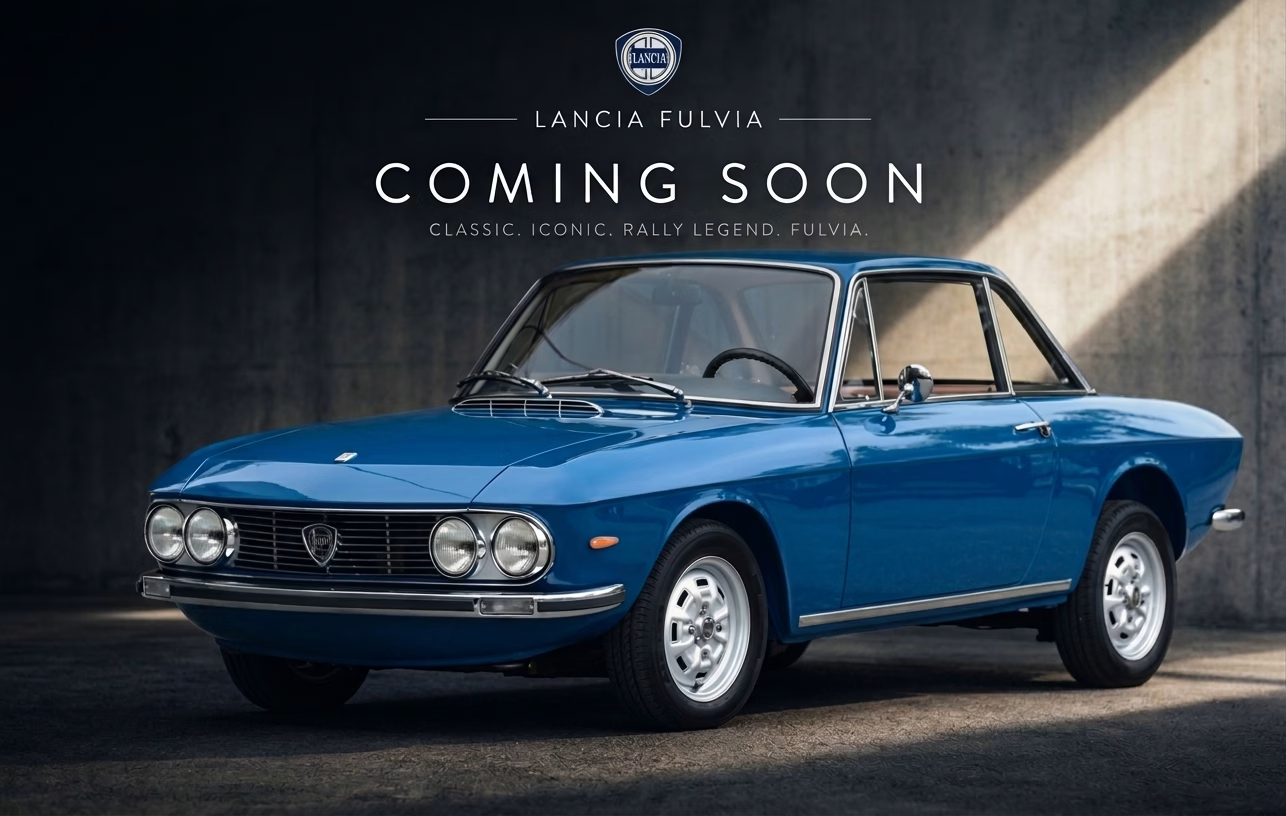
Lancia Fulvia Coupé (1965-1976)
The Fulvia Coupé, designed by Piero Castagnero, is one of the most elegant small coupés ever made. It used a narrow-angle V4 from 1.2 to 1.6 litres, and the HF version won the 1972 Monte Carlo Rally with Sandro Munari. Series 1 ran from 1965 to 1969, Series 2 from 1970, and the final Coupé 3 from 1974 to 1976. Read our full Lancia Fulvia Coupé buyer’s guide; a Fulvia Series 3 is coming soon at Gruppo Classics.
What to check: rust in sills, floors, door bottoms and around the front subframe mounts; correct engine for the version, especially on claimed HF cars.
Lancia Fulvia Sport Zagato (1965-1973)
The Fulvia Sport was a fastback coupé designed by Ercole Spada at Zagato, built on the Fulvia Coupé mechanicals. It is rarer and more distinctive than the Coupé.
What to check: body condition and correct panels; same mechanical checks as the Coupé.
Lancia Stratos HF (1973-1978)
The Stratos was one of the first cars designed from the start for rallying. Marcello Gandini styled it at Bertone, and it used the 2418 cc Ferrari Dino V6. About 492 road cars were built for homologation, and the Stratos won the World Rally Championship for makes in 1974, 1975 and 1976.
What to check: documented history and authenticity above all; many replicas exist.
Lancia Beta Coupé (1973-1984)
The Beta was the first new Lancia after Fiat took over in 1969, and the Coupé is its most popular body. It used Fiat’s Lampredi twin-cam, adapted for transverse mounting, from 1.3 to 2.0 litres, with fuel injection from about 1980 and a supercharged VX from 1982.
What to check: subframe and floor rust, the reason for a famous UK buy-back campaign in 1980; twin-cam cambelt history.
Lancia Beta HPE (1975-1984)
The HPE (High Performance Estate) was a three-door shooting brake on the Beta saloon platform. It shares the Coupé’s engines, including the supercharged VX, and offers real practicality.
What to check: the same rust and cambelt points as the Beta Coupé; tailgate and rear floor.
Lancia Beta Spider (from 1975)
The Beta Spider is a targa-top convertible designed by Pininfarina and built by Zagato. It has a removable roof panel and a folding rear section.
What to check: rust in sills, floors and subframe mounts; hood frame and seals.
Lancia Montecarlo (1975-1981)
The Montecarlo, designed and built by Pininfarina, is a mid-engined two-seater with the 2.0 litre Lampredi twin-cam. Series 1 (1975-1978) was called Beta Montecarlo; Series 2 (1980-1981) dropped the Beta name. In the USA it was sold as the Scorpion with a 1.8 litre engine. Its centre section became the basis of the Rally 037. Only 7,798 were built.
What to check: Series 1 front brakes, which were prone to locking (Series 2 fixed this); rust in sills and floor; cambelt.
Lancia Gamma Coupé (1977-1984)
The Gamma was Lancia’s flagship, with a 2.0 or 2.5 litre flat-four. The Coupé, designed by Aldo Brovarone at Pininfarina, is one of the most elegant shapes of the era, and only 6,790 were built.
What to check: the power steering pump is driven from the camshaft, and heavy steering at full lock or during start-up can make the cambelt skip or break; rust in sills and floors.
Lancia Delta HF Turbo and HF 4WD (1983-1987)
The Delta was designed by Giugiaro at Italdesign and won European Car of the Year in 1980. The HF of 1983 and HF Turbo of 1985 were the first hot versions, and the HF 4WD of 1986 started the four-wheel-drive rally line.
What to check: rust from the inside out; crash repair history; turbo and engine condition.
Lancia Delta HF Integrale (1987-1994)
The Integrale is a rally legend. Lancia won the World Rally Championship for manufacturers six times in a row, from 1987 to 1992, with the Delta. The road car went from the 8v (1987) to the 16v (1989), the Evoluzione (1991) and the Evo II (1993). About 44,000 Integrales were built.
What to check: rust in the front chassis legs, strut tops, sills, windscreen surround and around the sunroof; signs of crash repair; cracks at the top of the A-pillars; sump gasket oil leaks.
Lancia Thema 8.32 (1986-1992)
The Thema 8.32 is a four-door Lancia with a 2927 cc V8 derived from the Ferrari 308 Quattrovalvole engine, with some parts assembled by Ducati. It has a rear spoiler that rises at the touch of a switch. Only 3,971 were built in two series.
What to check: full service history of the V8; working spoiler mechanism; interior wood and leather condition.
Lancia/Autobianchi Y10 (1985-1996)
The Y10 was sold as the Autobianchi Y10 in Italy and as the Lancia Y10 in export markets. It offered a 999 cc FIRE, a 1049 cc Turbo with 84 hp, a 1301 cc GT i.e. and a 4WD version derived from the Panda 4×4. It was a small car with an upmarket interior.
What to check: rust and the condition of interior fabrics; turbo condition on the Turbo.
Abarth
Carlo Abarth founded his company in 1949 and moved it to Turin in 1951. Abarth built racing cars, tuning kits and exhausts, and turned small Fiats into giant killers. Fiat bought Abarth in 1971 and made it its racing department.
Fiat-Abarth 595 and 695
The 595 and 695 are the best-known Abarth road cars, based on the Fiat 500. The 695 SS used a 689.5 cc engine and reached about 140 km/h; about 1,000 were produced. Many 500s have since been converted to Abarth specification.
What to check: authenticity and documentation, since conversions and replicas are common; the same rust points as the Fiat 500.
Fiat-Abarth 850 TC and 1000 TC
The TC (Turismo Competizione) cars were racing-oriented versions of the Fiat 600, famous for their opened engine lids and success in touring car racing in the 1960s. The 1000 TC appeared in 1964 with about 85 hp.
What to check: authenticity and race history; many tribute cars have been built from standard 600s.
Fiat Abarth 124 Rally (1972-1975)
The 124 Abarth Rally was the homologation version of the 124 Spider, with a 1.8 litre engine of 128 PS, independent rear suspension and fibreglass panels. Fewer than 1,000 road cars were built.
What to check: authenticity, chassis number and documentation; rust in the steel parts of the body.
Autobianchi
Autobianchi was a Milan brand that Fiat used to test new ideas, including front-wheel drive, before applying them to its own cars.
Autobianchi Bianchina (1957-1970)
The Bianchina used Fiat 500 mechanicals under a more stylish body. It came as a saloon, cabriolet, Trasformabile, Panoramica estate and van, with 479 cc and later 499 cc engines. About 275,000 were built.
What to check: the same rust points as the Fiat 500; body-specific trim and panels, which are scarce.
Autobianchi A112 and A112 Abarth (1969-1986)
The A112 was a small front-wheel-drive hatchback designed by Marcello Gandini at Bertone. The Abarth version arrived in 1971 with a 982 cc engine, later 1050 cc. It went through eight series, and over 1.25 million A112s were built.
What to check: rust in sills, floors and wheel arches; originality on Abarth versions, since many standard cars were converted.
Innocenti
Innocenti, the Milan company famous for the Lambretta scooter, built British Motor Corporation cars under licence and later its own Bertone-designed Mini.
Innocenti Mini and Mini Cooper 1300 (1965-1975)
Innocenti assembled the classic Mini in Milan from 1965, starting with the 850 and later offering the 1000, Cooper and Cooper 1300. Italian-built Minis have their own trim and details that differ from British cars.
What to check: rust in subframes, sills, floors and door bottoms; Innocenti-specific trim and dashboard.
Innocenti Mini 90/120 and Mini De Tomaso (1974-1993)
In 1974 Innocenti launched a Bertone-designed three-door hatchback on Mini mechanicals, with 998 cc and 1275 cc A-series engines. After De Tomaso took over in 1976 there was a sporty Mini De Tomaso, and from 1982 Daihatsu three-cylinder engines, including a Turbo De Tomaso.
What to check: rust in sills, floors and wheel arches; parts for the specific engine version.
Maserati
Maserati turned from racing to road cars in the late 1950s and built some of the finest grand tourers of the 1960s and 1970s, often with bodies by Touring, Vignale, Ghia, Bertone and Italdesign.
Maserati 3500 GT (1957-1964)
The 3500 GT was Maserati’s first successful series production road car. The 2+2 coupé was designed by Carrozzeria Touring using its Superleggera construction, and Vignale built 245 Spyders designed by Giovanni Michelotti. It used a 3485 cc straight-six derived from racing, and the GTi of 1960 was one of the first fuel-injected Italian production cars.
What to check: documented history; condition of the aluminium body on its steel frame; corrosion between the different metals.
Maserati Ghibli (1967-1973)
The Ghibli was designed by Giorgetto Giugiaro at Ghia and is one of the great V8 coupés. It used a 4.7 litre V8, later a 4.9 litre in the SS. A total of 1,295 were built, including 125 Spyders.
What to check: full history; V8 condition; rust in sills, floors and the bottoms of wings and doors.
Maserati Indy (1969-1975)
The Indy was a four-seat V8 coupé designed at Vignale. It came with 4.2, 4.7 and 4.9 litre V8 engines, and 1,104 were built.
What to check: rust in sills and floors; V8 condition; interior and trim completeness.
Maserati Bora (1971-1978)
The Bora was Maserati’s first mid-engined road car, designed by Giugiaro at Italdesign. It used a 4.7 litre V8, later a 4.9 litre, and only 564 were built. Early cars used Citroën-derived high-pressure hydraulics for some systems.
What to check: hydraulic systems; V8 condition; full history.
Maserati Merak (1972-1983)
The Merak used the Bora’s body structure with a V6 engine, leaving space for two small rear seats. Its 3.0 litre V6 was related to the Citroën SM engine. The SS version had 220 PS, and a 2.0 litre version was made for Italy. About 1,830 were built.
What to check: the Citroën hydraulics on early cars; V6 timing chain condition; rust in sills and floors.
Maserati Khamsin (1974-1982)
The Khamsin was a front-engined V8 grand tourer designed by Marcello Gandini at Bertone. It used a 4.9 litre V8 and Citroën high-pressure hydraulics for steering, brakes, clutch and seats. Only 435 were built.
What to check: hydraulic system condition; full history; rust.
Maserati Biturbo family (1981-1994)
The Biturbo brought Maserati to a wider public with a compact body and a twin-turbo V6 of 2.0, 2.5 and later 2.8 litres. The family includes coupés, the 420/425/430 saloons, the Zagato-built Spyder, the 222, 2.24v, Karif and the 228. Early cars used carburettors; injection arrived in the mid-1980s. Later cars are generally more reliable.
What to check: rust in the bulkhead below the bonnet hinges, sills, door pillars and battery tray; turbo condition; full service history from a specialist.
Ferrari
Ferrari classics form a separate world, with their own specialists and auction market. We list a few key models here for completeness.
Ferrari Dino 206 GT and 246 GT/GTS (1967-1974)
The Dino was Ferrari’s first mid-engined road car, named after Enzo Ferrari’s son. The 206 GT, designed by Aldo Brovarone at Pininfarina, used a 2.0 litre V6, and only 152 were built. The 246 GT and the targa-top GTS used a 2.4 litre V6, with 3,569 built.
What to check: documented history and matching numbers; rust, which can be serious on Dinos.
Ferrari 308 GT4 (1973-1980)
The 2+2 308 GT4 was designed by Marcello Gandini at Bertone, the only Bertone-styled production Ferrari. It was sold as a Dino until 1976, then as a Ferrari, with a 2.9 litre V8 (2.0 litre in the Italian 208 GT4).
What to check: service history, especially cambelts; rust in sills and floors.
Ferrari 308 GTB/GTS (1975-1985)
The 308 GTB was designed by Leonardo Fioravanti at Pininfarina. Early cars had fibreglass bodies (808 were built) before steel from 1977. Fuel injection came in 1980 (GTBi/GTSi) and four-valve heads in 1982 (Quattrovalvole). The GTS became famous on television in Magnum, P.I.
What to check: cambelt service history; rust in steel-bodied cars; documentation.
Lamborghini
Lamborghini built its reputation with V12 supercars designed at Bertone.
Lamborghini Miura (1966-1973)
The Miura, designed by Marcello Gandini at Bertone, set the template for the mid-engined supercar. Its 3.9 litre V12 was mounted transversely behind the seats. About 764 were built across the P400, P400S and P400SV.
What to check: documented history and authenticity; specialist inspection.
Lamborghini Countach (1974-1990)
The Countach, also by Gandini, defined the wedge supercar. It went from the 3.9 litre LP400 to the 5.2 litre 5000 Quattrovalvole and the 25th Anniversary. A total of 1,983 were built.
What to check: documented history; specialist inspection of engine, chassis and body.
De Tomaso
Argentine-born Alejandro de Tomaso founded his company in Modena and built mid-engined cars with American Ford V8s.
De Tomaso Mangusta (1967-1971)
The Mangusta was designed by Giugiaro at Ghia, with a steel backbone chassis and gullwing-style engine covers. It used a Ford V8, mostly the 302. Only 401 were built.
What to check: chassis condition; documented history; parts for the body.
De Tomaso Pantera (1971-1992)
The Pantera was styled by Tom Tjaarda at Ghia and powered by Ford V8s, first the 351 Cleveland. Ford sold it in the USA through Lincoln-Mercury dealers until 1975. About 7,260 were built.
What to check: rust, as early cars had minimal rust protection; cooling system; quality of later modifications.
Iso
Iso of Bresso, near Milan, was known for the Isetta bubble car before it began building fast grand tourers with Italian bodies and American V8s.
Iso Rivolta IR 300 (1962-1970)
The IR 300 was a four-seat grand tourer designed by Giugiaro at Bertone, with a 5.4 litre Chevrolet 327 V8. About 797 IR 300s and 167 IR 340s were built.
What to check: rust in sills and floors; documented history; trim parts.
Iso Grifo (1965-1974)
The Grifo was styled by Giugiaro at Bertone, with mechanicals by Giotto Bizzarrini. Engines were Chevrolet V8s up to 7.4 litres and later a Ford 351. Only 413 were built.
What to check: documented history; rust; correct engine for the version.
Bizzarrini
Giotto Bizzarrini, the engineer behind the Ferrari 250 GTO, went his own way after working with Iso.
Bizzarrini 5300 GT Strada (mid-1960s)
The 5300 GT Strada was developed from the Iso A3/C race car and used a Chevrolet 327 V8. It is a low, aggressive berlinetta built in very small numbers in Livorno.
What to check: documented history and authenticity; specialist inspection.
Buying an Italian classic from abroad
Most of our buyers live outside Italy. Buying a classic from Italy is straightforward when you know the steps. These guides explain the process:
- Buying a classic car in Italy: a buyer’s guide
- Exporting a classic car from Italy: papers, plates and costs
- Buying a classic car from Italy as an American
- Importing a classic car from Italy to the UK
How we help
At Gruppo Classics we focus on classics from Italy: Alfa Romeo, Fiat, Lancia and more. Every car comes with a detailed photo report, including the underside, so you can judge it from home before you commit.
See what is for sale now, what is coming soon and what we have already sold. If you are looking for a specific model from this guide, contact us and we will tell you what we can find.
Leave a Reply