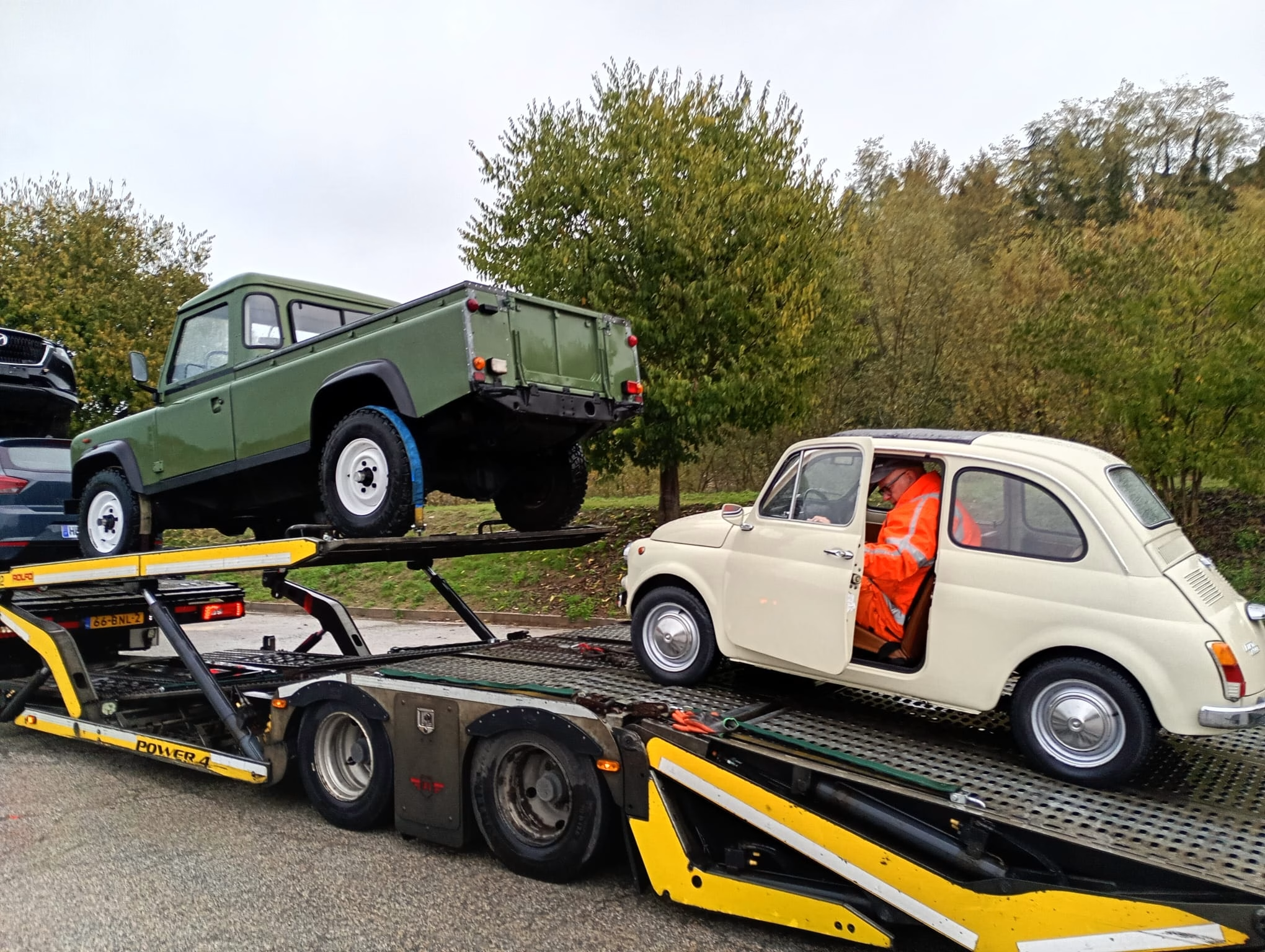
Shipping is the part of buying a classic in Italy that worries American buyers most, and it is usually the part that goes most smoothly. Thousands of cars cross the Atlantic every month. What makes the difference for a classic is choosing the right route, the right method and the right insurance, and having the paperwork ready before the car sails.
The route: by truck to Belgium or the Netherlands, then by sea
It sounds logical to ship an Italian car from an Italian port, and we used to. We no longer do. Today our cars are first trucked from Italy to one of the big North Sea ports:
- Antwerp (Belgium), one of Europe’s largest ports, with frequent container sailings to the US.
- Zeebrugge (Belgium), a major hub for vehicle shipping.
- Rotterdam (the Netherlands), Europe’s largest port.
The reason is simple. Sailings from these ports to the US are more frequent and the crossing is shorter, so the car arrives sooner: in our experience often as much as a month faster door to door than shipping from an Italian port. Ocean freight is also considerably cheaper, which more than covers the truck journey north. The truck from Italy to the port usually takes a few days, depending on the transporter’s schedule.
US arrival ports
Choose the arrival port closest to home that has a good service from the North Sea ports. Common choices are New York/New Jersey, Baltimore, Norfolk, Charleston and Savannah on the East Coast, Houston on the Gulf, and Los Angeles/Long Beach on the West Coast. East Coast ports are the shortest and usually cheapest route. West Coast deliveries go through the Panama Canal and take noticeably longer.
Container or RoRo?
Shared container: your car is strapped down in a container with a few others. It is protected from weather and handling, and a car that does not run can still be loaded. This is how most of our cars travel, and it is usually the best balance of protection and cost.
Exclusive container: the car travels alone in its own container. It is the most protected and the most expensive option, and the usual choice for a very valuable or delicate car.
Roll-on/roll-off (RoRo): the car is driven onto a specialized vehicle ship and parked on an enclosed deck. The car must run and steer, it is driven by port staff, and it normally has to be empty of personal items.
Our article on what it really costs to import a classic from Italy gives typical prices for the truck and the shared container.
How long does it take?
From Antwerp, Zeebrugge or Rotterdam, the ocean crossing to East Coast ports such as New York/New Jersey or Baltimore typically takes around two to three weeks, depending on the service. To the West Coast, expect roughly a month or more. Then add the parts around the crossing:
- Export deregistration in Italy: usually about a day once the papers are complete.
- Trucking to the North Sea port: usually a few days.
- Waiting for the container to be loaded and the next sailing: from a few days to a couple of weeks.
- Unloading, customs clearance and port release in the US: often a few days to a week or two.
- Inland transport to your home: a few days to over a week, depending on distance.
Put together, door to door to the East Coast typically takes somewhere around four to seven weeks. Delays at sea or at the port are not unusual, so do not plan a show or a wedding around the expected date.
Insurance: do not rely on the carrier
This is the point most buyers underestimate. Under US law for ocean shipments (the Carriage of Goods by Sea Act), a carrier’s liability can be limited to $500 per package unless a higher value is declared, and a car often counts as one package. In other words, without your own insurance, a total loss could leave you with very little.
Buy marine cargo insurance for the full value of the car. When you compare policies, ask:
- Is it all-risk cover, or only total loss?
- Does it run from collection in Italy to delivery at your door, including the truck journey, or only port to port?
- What is the deductible, and are scratches or small dents excluded?
- How do you make a claim, and how quickly must damage be reported?
Make sure the car is photographed in detail before loading, and inspect it carefully on delivery before signing anything. Note any damage on the delivery receipt. That makes a claim far easier.
Paperwork before the car sails
On the Italian side, the car must be deregistered for export and travel with its original documents. Our guide to exporting a classic car from Italy explains each step. On the US side, your customs broker handles the filings, including the Importer Security Filing that must be made before the car is loaded. Late or missing filings can lead to penalties.
At arrival, the broker files the customs entry with the HS-7 and EPA 3520-1 forms and pays the duty: a base rate of 2.5%, with additional EU tariffs currently applying, so expect up to 10% in total and confirm with your broker. The 25-year rule and the forms are explained in our guide to importing a classic car from Italy to the USA.
Preparing the car
- Fuel tank low, but enough to drive on and off.
- Battery charged, or disconnected for container shipping if the shipper asks.
- No loose personal items in the car; ask your shipper before including any spare parts.
- Clean underside, as agricultural inspections can stop a dirty car.
- Keys, documents and a copy of the photo report sent ahead to you and your broker.
How we help
We are based in Ceva, Piedmont. For the cars we sell, we handle the Italian export deregistration and arrange door-to-door shipping via Antwerp, Zeebrugge or Rotterdam. Every car comes with a full photo report including the underside, which doubles as a record of its condition before loading. Five of the ten Fiat 500s we have sold since August 2026 were shipped to the United States; see them on our sold cars page.
Use the shipping calculator on our homepage for a quote to your address. For the whole process, read buying a classic car from Italy as an American and how to inspect and pay without flying over. Then see our cars for sale.
Transit times and insurance terms in this article are typical examples, not guarantees. Schedules, routes and policies change. Confirm details with your shipper, insurer and customs broker for your car.



Leave a Reply