Since Brexit, buying a classic car in Italy and bringing it to the UK has become a customs import rather than a simple drive across a border. That sounds harder than it is. For a car over 30 years old the costs can be surprisingly low, and the steps are always the same: the right papers in Italy, a clean import declaration, a short note to HMRC and a DVLA registration. This guide walks through each step as it works for a classic bought in Italy.
1. Duty and VAT: the historic vehicle rate
A standard car import into the UK pays 10% import duty and 20% import VAT. A car that qualifies as a vehicle of historical interest is treated very differently: no import duty and an effective import VAT rate of 5%. In broad terms the car has to be at least 30 years old, of a model or type that is no longer in production, and still in its original state, without substantial changes to the chassis, steering, brakes, engine or bodywork. Normal repairs and like-for-like replacement parts are fine.
Two things to know. First, a car that does not qualify as historic but was built in the EU can still enter at 0% duty under the UK-EU trade agreement, but only with a valid statement of origin from the exporter; without it, 10% duty can apply. Second, HMRC decides on classification, not the age alone. For a heavily modified car, or one you are unsure about, ask your customs agent before the car is shipped. Always check the current HMRC guidance, because rates and rules can change.
2. Papers in Italy
Before the car leaves Italy it is deregistered for export (radiazione per esportazione). That takes one day. You receive the Italian registration and ownership documents together with the proof of deregistration; together with the bill of sale, these are the documents UK customs and the DVLA will ask to see. If you want to drive the car out of Italy yourself, it can get Italian EE export plates, which take about seven days and are valid for up to 30 days. Our guide to exporting a classic car from Italy explains every document, and the Italy buyer’s guide covers what to check before you buy.
3. Getting the car to the UK
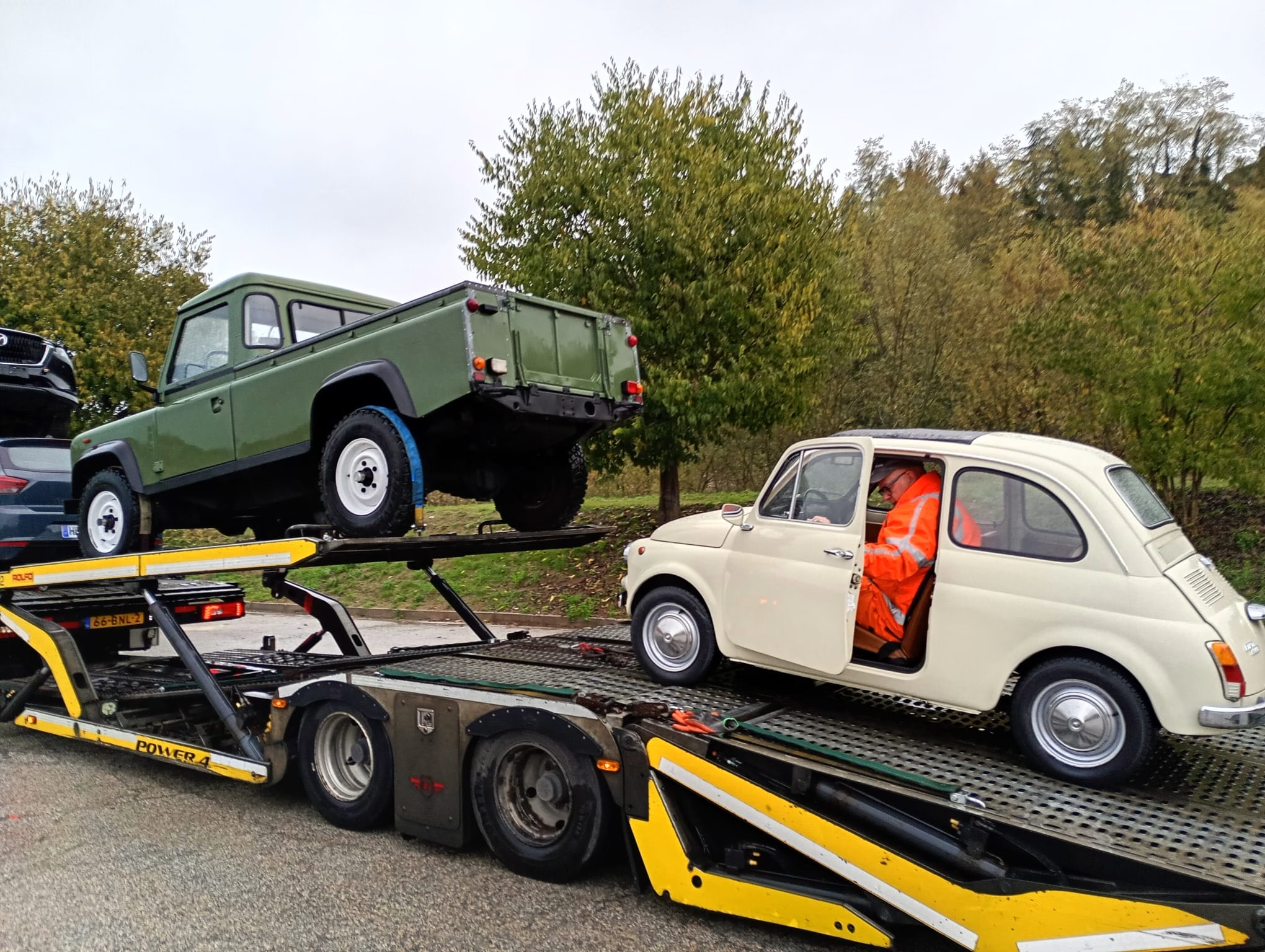
Most cars travel from northern Italy to the UK on a covered or open car transporter, usually in a few days to two weeks depending on the route and the load. The shipping company or a customs agent makes the import declaration, either before arrival or at the border, and arranges payment of any duty and VAT. You can also drive the car home on export plates via a ferry or the Channel Tunnel; in that case you tell HMRC yourself and they let you know if VAT and duty are due. You can see what transport to your postcode costs with the shipping calculator on our homepage.
4. Tell HMRC (NOVA) within 14 days
Every imported vehicle has to be notified to HMRC within 14 days of arriving in the UK. This is done through the Notification of Vehicle Arrivals service, known as NOVA. Your customs agent can do it for you. The DVLA will not register the car until the NOVA notification is in place.
5. Approval and DVLA registration
The car then has to be registered with the DVLA, usually with form V55/5 for a used imported vehicle, the Italian documents, proof of identity and insurance details. The DVLA gives the car a UK registration number, and you can have number plates made. Depending on the car, you may first need to show that it meets UK requirements; for older classics an MOT is often the main check. You may drive the car to a pre-booked MOT or approval test before it is registered.
6. Historic vehicle tax and MOT exemption
Once registered, older classics can be put in the historic vehicle tax class. According to GOV.UK, cars built before 1 January 1986 pay no vehicle tax from 1 April 2026, but you have to apply for the exemption. A car built or first registered more than 40 years ago can also be exempt from the annual MOT, as long as no substantial changes have been made, such as replacing the chassis, body, axles or engine. The car must still be kept roadworthy.
7. A quick checklist
- Check that the car is over 30 years old and in original condition, so it qualifies for the historic rate
- Ask for the Italian registration documents, proof of export deregistration and the bill of sale
- Arrange transport and a customs agent for the import declaration
- Make sure HMRC is notified through NOVA within 14 days
- Register with the DVLA, insure the car and apply for the historic tax class
How we help
We sell classic cars from our workshop in Ceva, Piedmont, to buyers across Europe, the UK and the United States. Every car comes with a full photo report, underside included, and we handle the Italian side: the export deregistration, the papers and, if you want, the export plates and door-to-door transport. New cars are offered to our list first, before they go to auction. See what is for sale now or what is coming soon.
This guide is general information, not tax or legal advice. Rates and procedures can change; check the current guidance on GOV.UK and with your customs agent before you import.



Leave a Reply