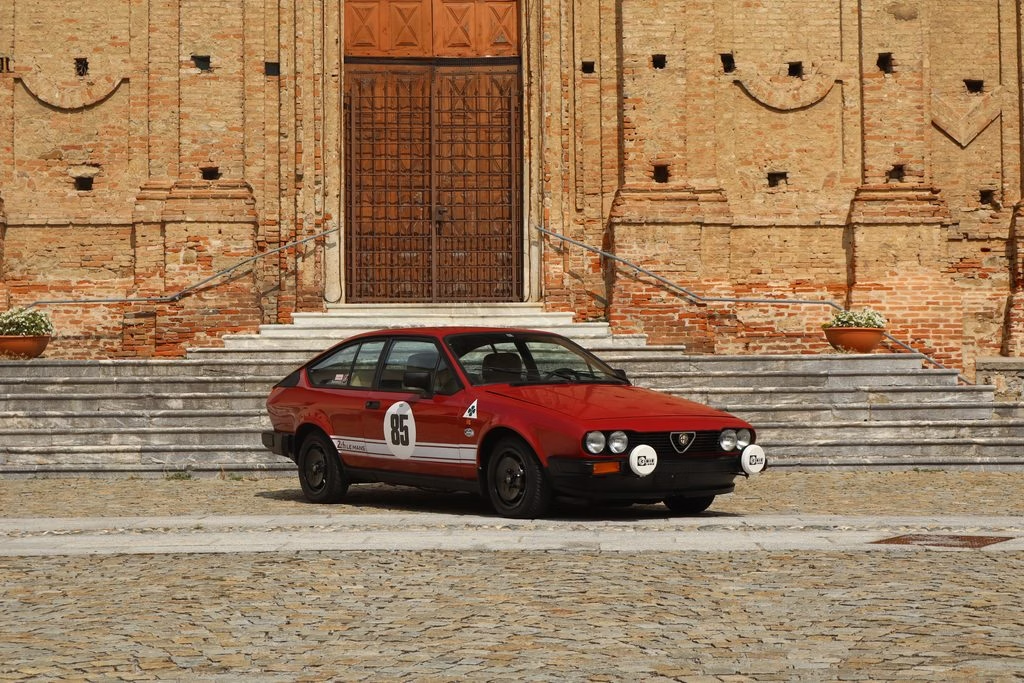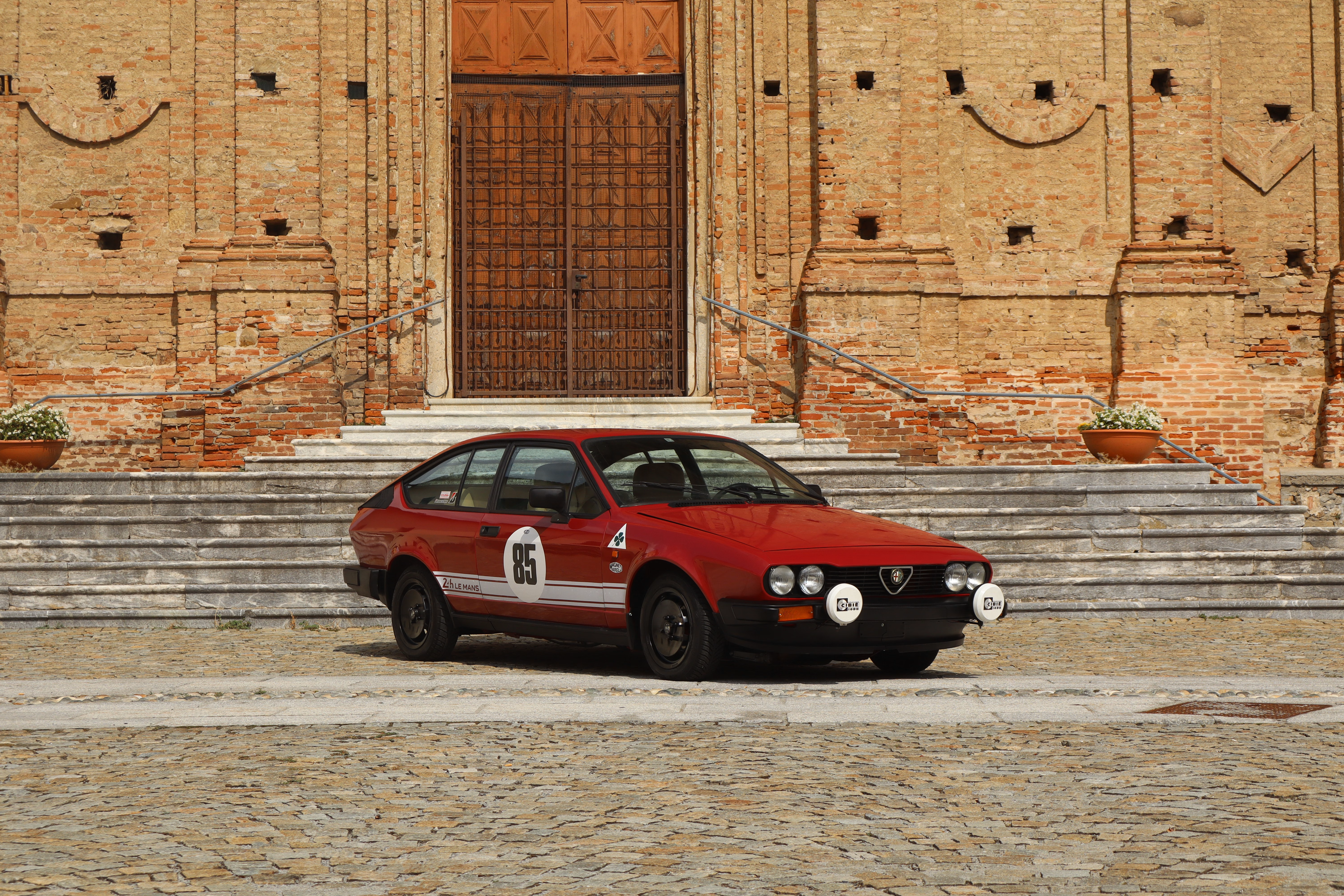
The Alfa Romeo Alfetta GTV is one of the great bargains of the Italian classic world. A Giugiaro-designed coupé with a race-bred chassis layout, four proper seats and a twin-cam engine, for less than many people pay for a used family car. It is also a car that rewards buyers who know what they are looking at. This is what we look for when an Alfetta GTV comes in.
Why the Alfetta is different
Alfa Romeo built the Alfetta around a transaxle: the gearbox and clutch sit at the back, together with the differential, and the rear suspension is a de Dion axle. The result is an almost even weight distribution and handling that still feels balanced today. It also means the Alfetta has a few parts you will not find on most cars of the era, and those are exactly the parts to check.
Rust: where to look first
Like most Italian cars of its time, the Alfetta’s biggest enemy is rust. Look at the sills and jacking points, the floor pans, the bottoms of the doors and wings, the front valance and the rear wheel arches. Open the bonnet too: the inner wings along the sides of the engine bay are a known rust spot. Lift the carpets if you can, and look under the car with a torch. A car with solid metal and tired mechanics is a far better buy than a shiny car with rot underneath. That is why every car we sell comes with a full photo report, underside included.
The transaxle and gearbox
Drive the car and change gear at different speeds. Alfa Romeo gearboxes are known for their synchromesh, and the Alfetta is no exception: a crunch going into second gear, especially with a cold gearbox, means worn synchros, and on many cars they need replacing. Listen for clunks when you pull away and when you lift off the throttle: the rubber couplings on the propshaft wear out, and a vibration at speed often starts there. None of this is a reason to walk away, but it should be in the price.
Brakes and suspension
The rear brakes sit inboard, next to the differential, which makes them harder to work on than normal brakes. Ask when they were last serviced. Check that the car brakes in a straight line and that the handbrake holds. At the front, worn bushes and tired shock absorbers make the steering vague; good shocks transform how an Alfetta drives.
Engine: original or upgraded?
The twin-cam four is a robust engine when it has been maintained. Look for oil leaks, blue smoke on start-up and a clean coolant system. Many Alfettas have been upgraded over the years, and a well-built upgrade can make a great car. Our current Alfetta GTV, for example, runs a tuned 2.0 Twin Spark with 160 hp. With a modified car, ask for the details of the work and who did it.
Papers
Make sure the chassis number matches the documents and that the car has a valid revisione, the Italian roadworthiness test. If you are buying from abroad, our guides on buying a classic in Italy and exporting it explain the rest.
Is an Alfetta GTV for you?
If you want an Italian coupé you can actually use, with room for four, a sound that makes every tunnel a reason to drive, and a chassis engineers still talk about, the Alfetta GTV is hard to beat. Buy the best body you can find, budget for the gearbox and brakes, and it will give you years of driving. Curious? Have a look at our Alfetta GTV for sale.