Ask a room full of classic car people which Italian coupé they would take home for the price of a good used hatchback, and the Lancia Fulvia Coupé comes up again and again. It is small, beautifully made, light on its feet and engineered in a way only Lancia would have dared. It is also a car where knowing what to look for makes all the difference.
Why the Fulvia is special
Under the bonnet sits a narrow-angle V4, an engine so compact that it fits where other makers would put a straight four. It drives the front wheels, which was unusual for a sporting coupé of its time, and the car’s balance and steering are the reason Fulvias did so well in rallying. The coupé body is clean and modern, with large windows and slim pillars, and the quality of the interior still surprises people who sit in one for the first time.
Rust comes first
As with every Italian car of the period, the body is what decides the price. Look closely at the floor, the sills, the bottoms of the doors and the area around the front and rear screens. Check the boot floor and the spare wheel well, and pay special attention to the front subframe: rust there is serious and expensive to repair. Repairs on a Fulvia are possible, but bodywork is expensive, so a solid car is worth paying more for. Ask for photos of the underside before you travel; we include them in every photo report.
Bring a paint thickness gauge, or at least a magnet. The Fulvia body is so stiff and complex that earlier repairs often contain a lot of filler, hidden under fresh paint. Where the gauge jumps or the magnet will not stick, there is filler underneath.
Engine and gearbox
A healthy V4 starts easily, idles evenly and revs freely. Listen for rattles from the timing chain area on a cold start, look for oil leaks and check the oil for any sign of coolant. On the road, the gearbox should change cleanly; check every gear, and listen for whining. Ask for the service history: a Fulvia that has been looked after by someone who knows these engines is worth a lot.
Be extra careful with a Fulvia that has been standing for a long time. These V4 engines are known for scaling: when a car stands for years, the coolant passages can silt up completely, and the only cure is taking the cylinder head off. Look closely at the coolant. Is it clean, or did the car stand with plain water in the system? Is there any oil in it? The seal of the water pump can leak and let oil and coolant mix, which is a job you want to know about before you buy.
Originality and documents
Many Fulvias were rallied, modified or restored along the way. Originality is increasingly valued, so check that the interior, wheels and trim are correct for the series, and that the chassis number matches the papers. An ASI certificate helps; read our guide to ASI certification to see what it does and does not tell you.
Our Fulvia
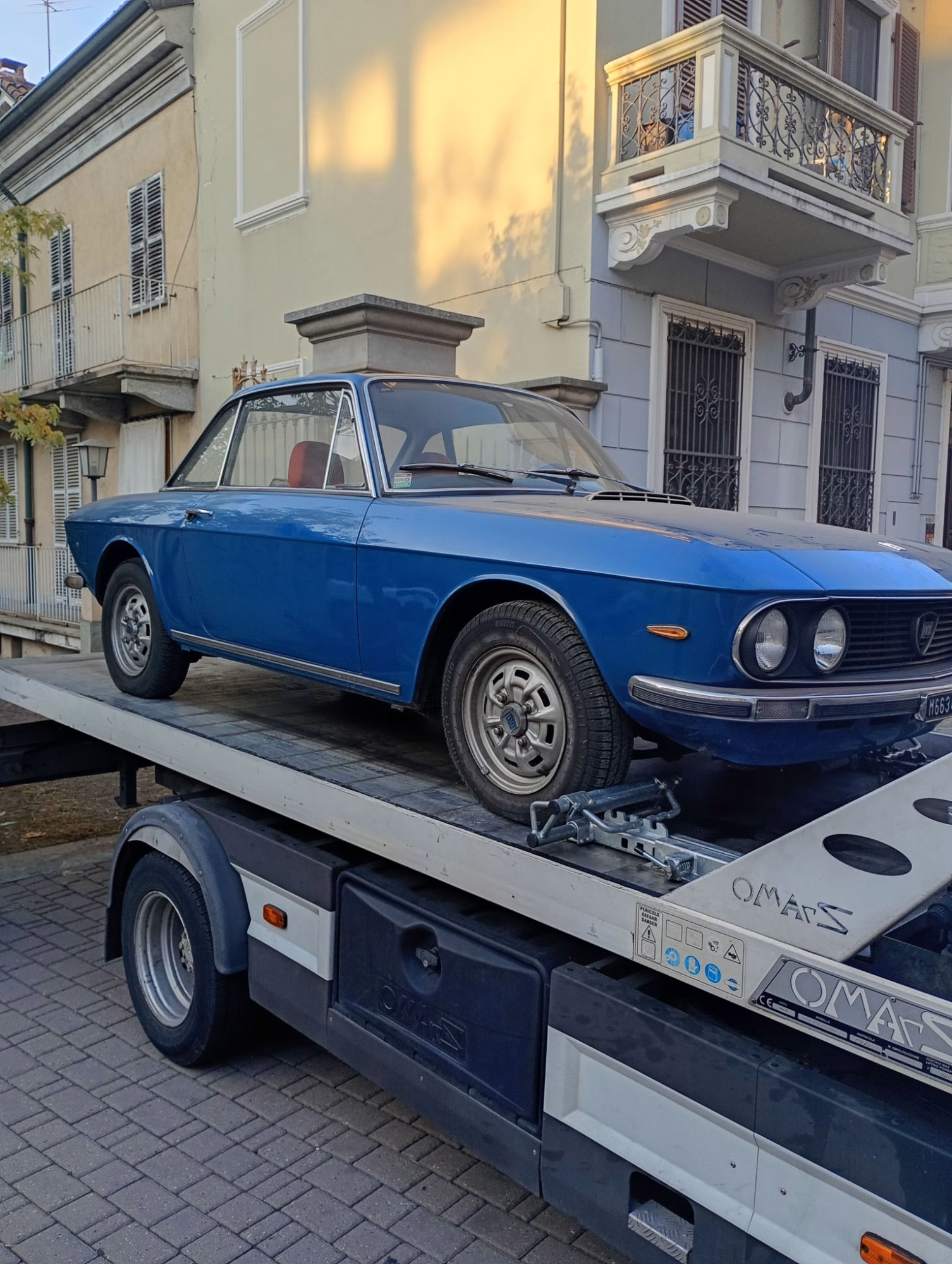
We have a Lancia Fulvia S3 coming in: Blu Agnano, from its first owner, with just 24,000 km. Want to see it first? Leave your email on the page and we will send you the full photo report as soon as it is ready.